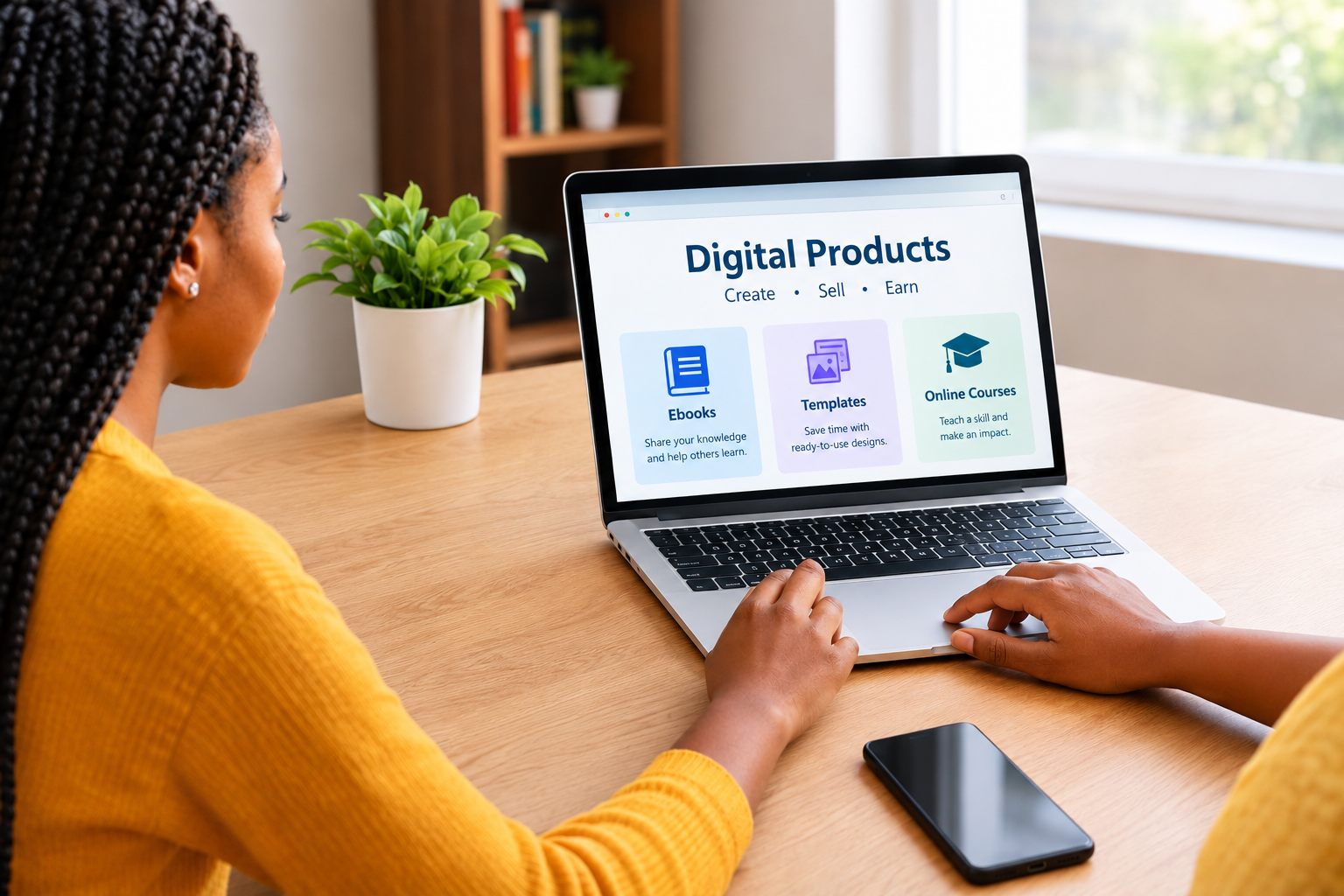
Imagine spending weeks thinking about starting a business, only to discover that your first product does not have to sit on a shelf, occupy a storeroom or travel through a delivery service.
It could be a guide someone reads on their phone, a design a business owner uses to advertise a new product, or a training programme that helps a beginner acquire a useful skill.
These are examples of digital products,and they have opened another route into entrepreneurship for people willing to learn, create and understand their customers.
For someone starting with limited resources, the appeal is easy to understand. There is no need to purchase physical stock before making the first product. Instead, the work begins with identifying a problem, developing a useful solution and finding people who may be willing to pay for it.
However, the opportunity should not be confused with guaranteed income. A product can be inexpensive to reproduce and still struggle to attract buyers. Success depends on its quality, its relevance to customers and the effort invested in marketing it.
Three options deserve particular attention: practical ebooks, ready-to-use digital templates and online training products.
Ebooks That Give Readers a Practical Advantage.
A person does not need to write a lengthy book before entering the digital publishing business. A short, carefully prepared guide can be a useful starting point when it answers a question people genuinely want resolved.
Consider a small business owner who wants to promote products on social media but does not know what to post each day. A guide explaining how to plan a month's worth of content could provide a practical solution.
Another example is a beginner who wants to improve their writing. A downloadable workbook containing writing exercises, editing techniques and examples could help that reader practise independently.
These ideas work best when the intended reader is clearly defined. A guide designed for Nigerian food vendors, for instance, can address their particular promotional needs instead of offering broad advice that applies to everyone and no one in particular.
The first step is to choose a subject you understand well enough to explain accurately. Write an outline, organise the lessons logically and use examples to make the information easier to apply.
You can prepare the manuscript in Google Docs or another word processor. After editing, you can format it into a readable PDF and create a cover that reflects the subject.
Before selling it, ask a few people from your intended audience to review the guide. Their questions may reveal missing explanations, confusing sections or information that needs improvement.
Pricing should reflect the usefulness of the material, the needs of the audience and the prices of comparable products. Avoid assuming that a longer ebook automatically deserves a higher price.
The strongest starting point is a guide that helps a reader complete a particular task, make a better decision or understand a difficult subject.
Digital Templates for People Who Need to Save Time.
Some customers are not looking for another book to read. They want something they can use immediately.
This is where digital templates become attractive.
A template provides a starting structure for a task that might otherwise require considerable time or design effort. Customers can adapt it to their own businesses, personal projects or professional responsibilities.
A freelance designer might create invoice templates. A job seeker might need a CV layout. A small business owner might want a simple expense tracker, while a social media manager might need a content calendar to organise posts for several clients.
The opportunity lies in making a useful tool for a clearly identified group.
For example, a collection of promotional designs for Nigerian fashion vendors could include layouts for new arrivals, discounts, customer testimonials and product announcements. The buyer would receive a coordinated set of designs rather than having to create each one independently.
Tools such as Canva and Google Sheets can help beginners develop different kinds of templates without building software from scratch.
Nevertheless, a template must do more than look attractive. Text should be readable, instructions should be clear, and editable elements should work as intended. If the product is designed for a specific profession, its examples and layout should reflect that profession's actual needs.
Creators must also respect copyright and licensing conditions. Before distributing a template, check that the fonts, graphics, photographs and other elements are permitted for the intended use.
Once the product is ready, it can be offered through a suitable online storefront or marketplace. A product description should explain exactly what the customer receives, which applications are required and what can be customised.
A useful template saves the buyer time or makes a task easier. That practical benefit should be the centre of the offer.
Online Training for People Who Want to Learn a Skill.
Knowledge can also become a digital product when it is organised into a learning experience.
People regularly seek help with tasks such as editing videos, writing for websites, managing social media accounts, using spreadsheets and creating graphics. Someone who can teach one of these skills clearly may be able to develop a paid training programme.
The important distinction is that knowing how to perform a task is not always the same as knowing how to teach it.
A good course takes learners through a sequence of manageable steps. It explains the tools they need, demonstrates the process and gives them opportunities to practise what they have learned.
Suppose a beginner wants to learn social media management. A short course could cover content planning, caption writing, basic graphic design and performance tracking. Learners could receive video demonstrations, written notes and exercises to complete along the way.
The creator does not have to begin with an expensive recording studio. A smartphone or computer may be sufficient for a simple demonstration, provided the audio is clear and the instructions are easy to follow.
Before recording a large collection of lessons, consider preparing one introductory module and asking potential learners for feedback. This helps reveal whether the explanations are understandable and whether the proposed course addresses a real need.
Training products also require maintenance. Software changes, platform updates and new working practices can make older lessons less useful. Creators should review their materials periodically and correct outdated information.
Unlike a simple downloadable template, a course may require more time for preparation, learner support and updates. Its price should account for the quality of instruction and the value it provides.
For someone with demonstrable expertise and a willingness to teach, a well-organised course can become a product that serves learners beyond their immediate personal network.
Choosing a Product That Matches Your Strengths.
The temptation to pursue several ideas at once can delay progress. A better approach is to select one product that matches your current abilities and the needs of a specific audience.
If you communicate well through writing, an ebook may be the easiest way to begin. If you enjoy arranging information visually, templates could be a natural fit. If you can demonstrate a skill patiently, consider developing a short training programme.
Your decision should also reflect the time you have available. A useful ebook may require research and editing, while a template collection demands design and testing. A course needs lesson planning, recording and a way to support learners.
Before committing to an idea, investigate whether potential customers already spend time or money trying to solve the problem. Read relevant discussions, examine competing offers and speak directly with people who fit your intended audience.
Competition alone does not mean an idea is unsuitable. It does, however, make it important to explain what your product offers and why it may be useful to a particular customer.
You should also avoid creating a product solely because someone on social media claims that it generates substantial income. Other people's results do not establish what you will earn.
Turning Your First Idea Into a Sellable Product.
Once you have chosen an idea, focus on producing a small but complete version rather than spending months preparing something customers have not yet evaluated.
Start by writing down the problem you intend to solve. Describe the person experiencing it, what they need and how your product will help.
Next, prepare the product and check it carefully. An ebook should be readable, a template should function properly, and a course should deliver the lessons promised in its description.
Choose a selling platform that supports your country, payment preferences and product format. Examine transaction charges, withdrawal arrangements and delivery options before deciding where to sell.
Prepare a straightforward product page that explains the contents, price, intended audience and delivery process. Buyers should know what they are purchasing before making payment.
You can then begin promoting the product through channels where your intended customers are active. A person selling templates could demonstrate how a business might use one. An ebook creator could share a helpful lesson from the guide. A course instructor could publish a short demonstration of the skill being taught.
These examples allow potential buyers to understand the product's usefulness before deciding whether to purchase it.
Keep track of the questions people ask, the content that attracts attention and the feedback received from customers. If people show interest but do not buy, investigate whether the price, product description, trust signals or payment process could be creating difficulties.
Improvement should be guided by evidence rather than assumptions.
Understanding the Costs and Risks Before Starting.
Digital products can remove some expenses associated with traditional retail, but they do not eliminate business costs.
Depending on the product and sales channel, you may need to pay for internet access, software subscriptions, payment processing, advertising, platform services or professional assistance.
There is also the time spent researching, creating, testing, promoting and maintaining the product.
Copyright presents another important consideration. Sell work you created yourself or material you have permission to distribute. Do not take another person's ebook, template or course and present it as your own.
Customer trust matters just as much. Describe your product honestly, provide the files or access promised, and establish clear customer service and refund policies that comply with applicable requirements.
Most importantly, do not build your financial plans around sales that have not happened. Revenue is not the same as profit, and neither is guaranteed.
A small launch can help you learn whether customers value your offer without committing substantial money to an untested idea.
The Next Step for Aspiring Digital Entrepreneurs.
Starting a digital product business is a process of learning what people need and developing something that meets that need well.
Ebooks can package practical knowledge into a readable resource. Templates can simplify recurring tasks. Online training can help learners acquire skills through organised instruction.
Each option offers a different route into the market, but none removes the need for planning, quality control and consistent promotion.
For a beginner, the immediate objective should be to identify one genuine customer problem, develop a useful solution and test whether people are willing to pay for it.
That first experience can reveal more about the business than spending months creating products without speaking to potential buyers.
The opportunity is not simply to put a file online. It is to create something useful enough that customers understand its value and feel confident paying for it.



Conversation
0 publishedJoin the discussion with a NewsRoomUpdate account. Comments are reviewed to keep the conversation constructive. Sign in to comment