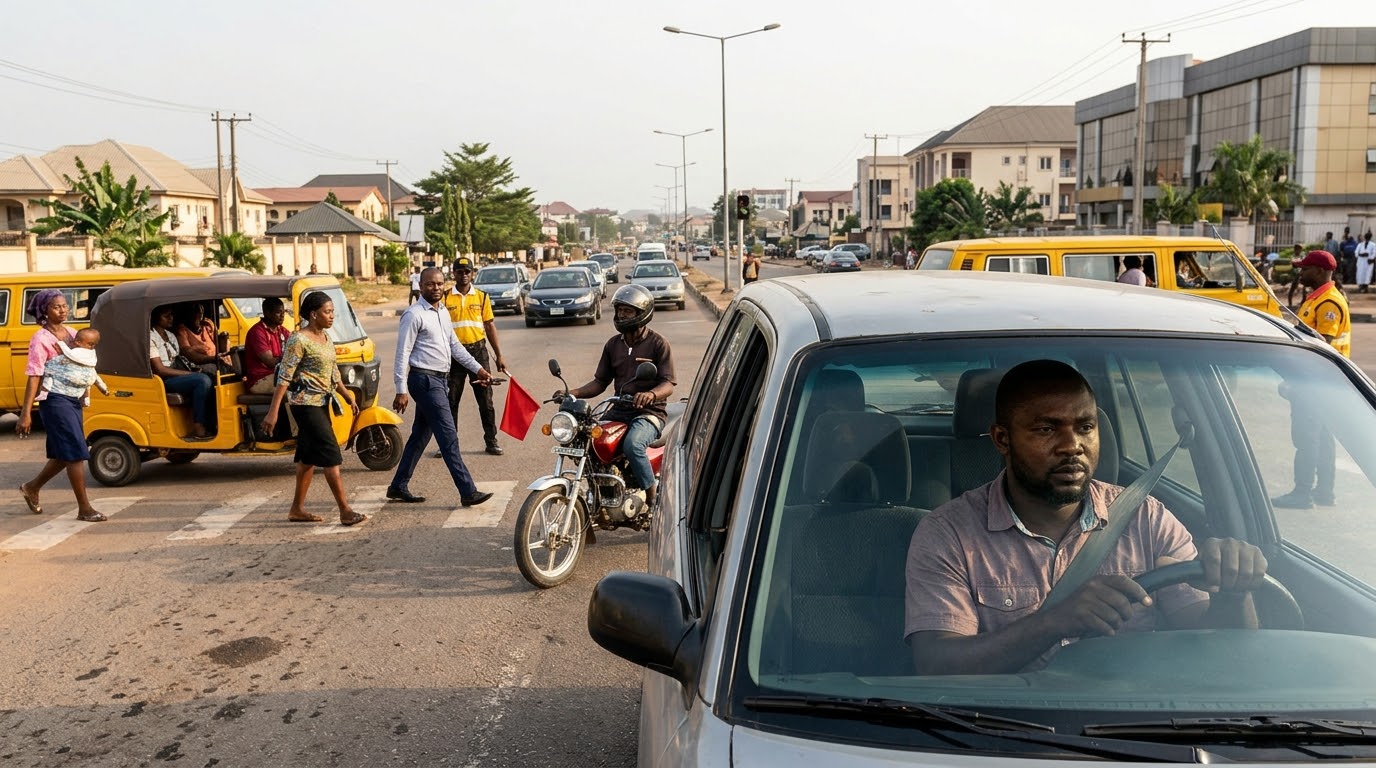
Driving on Nigerian roads requires more than knowing how to operate a vehicle. Drivers must also understand that they are sharing the road with people who move at different speeds, use different types of transportation and may not always follow the same traffic rules.
In busy cities such as Lagos, Abuja, Ibadan and Port Harcourt, a single road can carry private cars, commercial buses, motorcycles, tricycles, delivery riders, cyclists and pedestrians. This mixture can make everyday journeys challenging, particularly when drivers fail to pay attention to other road users.
Staying safe begins with understanding that everyone has a responsibility to use the road carefully.
Pay Attention to Your Surroundings
One of the most important habits every driver should develop is paying attention to what is happening around the vehicle.
Drivers should regularly check their mirrors, watch the road ahead and remain alert to movement on both sides of the vehicle. This is particularly important in busy areas where motorcycles may move between vehicles and pedestrians may attempt to cross unexpectedly.
Looking ahead also gives drivers more time to notice possible dangers, slow down and make safer decisions.
Avoid distractions such as using a mobile phone, adjusting entertainment systems or engaging in activities that take your attention away from driving.
A few seconds of distraction can make it difficult to respond to sudden changes on the road.
Give Motorcyclists and Tricycles Enough Space
Motorcycles and tricycles are common forms of transportation across Nigeria. They are often used on busy urban roads and in communities where other transport options may be limited.
Because motorcycles are smaller than cars and buses, drivers may not always notice them immediately. They can also be harder to see in blind spots.
Before changing lanes, turning or reversing, check your mirrors and blind spots carefully.
Do not drive too close to motorcycles or attempt to force them out of their path. Give them enough room to move safely, and avoid sudden movements that could put riders at risk.
The same consideration should be given to tricycle operators, particularly when they are turning, stopping to pick up passengers or moving through narrow roads.
Respect Pedestrians and Pedestrian Crossings
Pedestrians are among the most vulnerable people on the road because they have little physical protection when an accident occurs.
Drivers should slow down when approaching pedestrian crossings, school zones, markets, residential areas and other places where people are likely to walk across the road.
Never assume that a pedestrian has seen your vehicle or will wait for you to pass.
Where pedestrians are crossing, give them enough time and space to move safely. Avoid driving onto walkways or blocking pedestrian crossings while waiting in traffic.
Extra care is necessary around children, older people and individuals who may need more time to cross.
Maintain a Safe Following Distance
Driving too close to the vehicle in front is dangerous because it reduces the time available to respond when traffic suddenly slows down.
A vehicle may stop because of a pedestrian, an obstacle, a traffic signal or another unexpected situation. If the driver behind is following too closely, a collision may occur.
Drivers should maintain enough space to stop safely without hitting the vehicle ahead.
This distance should increase when driving in heavy rain, at night, on slippery roads or when visibility is poor.
Large vehicles such as trucks and buses also require extra consideration because they may need more distance to slow down or stop.
Avoid Aggressive Driving
Traffic congestion can make drivers impatient, especially when they are running late or dealing with long delays.
However, aggressive driving creates unnecessary risks for everyone sharing the road.
Frequent unnecessary horn use, dangerous overtaking, sudden lane changes, excessive speeding and refusing to give other road users space can lead to serious accidents.
Drivers should remain calm even when other people make mistakes.
If another driver behaves aggressively, avoid responding with the same behavior. Maintain a safe distance and allow the situation to pass where possible.
Arriving safely is more important than winning an argument on the road.
Use Your Indicators Before Turning or Changing Lanes
Indicators communicate your intentions to other road users.
Before turning or changing lanes, signal early enough to give other drivers and riders time to understand what you intend to do.
However, using an indicator does not automatically give you the right to move into another lane. You must still check that the road is clear and that the movement can be completed safely.
Drivers should also avoid making sudden turns without warning, especially in areas with motorcycles, cyclists and pedestrians.
Clear communication helps everyone make better decisions.
Understand the Risks Around Large Vehicles
Trucks, trailers and buses have different driving and stopping characteristics from smaller vehicles.
Some large vehicles have wider blind spots, require more room to turn and may take longer to stop.
Avoid driving directly behind a large truck if you cannot see the road ahead. Do not attempt to squeeze between a turning truck and the roadside, as the vehicle may need additional space to complete its movement.
When overtaking, ensure there is enough visibility and distance to complete the manoeuvre safely.
Drivers of smaller vehicles should also remember that large vehicles may not always see them, particularly when they are positioned close to the vehicle’s sides or rear.
Take Extra Care During Rain and Poor Visibility
Rain can make roads slippery, reduce visibility and increase stopping distances.
During heavy rainfall, drivers should reduce their speed, increase their following distance and use appropriate vehicle lights when visibility is poor.
Avoid sudden braking or sharp turns, especially when driving through waterlogged areas.
If visibility becomes too poor to drive safely, find a suitable safe place to stop and wait until conditions improve.
Other road users may also struggle to see approaching vehicles during rainfall, so patience and caution become even more important.
Keep Your Vehicle in Safe Working Condition
Road safety is not only about how a driver behaves. The condition of the vehicle also matters.
Faulty brakes, worn tyres, damaged lights and defective indicators can increase the risk of accidents.
Drivers should check their tyres, brakes, headlights, brake lights, indicators, mirrors and windscreen wipers regularly.
A vehicle that is not properly maintained may become dangerous to its occupants and everyone around it.
Routine inspections and timely repairs can help identify problems before they become serious.
Remember That Road Safety Is a Shared Responsibility
No single road user controls everything that happens on the road. Drivers, motorcyclists, cyclists and pedestrians all have responsibilities that contribute to safer journeys.
Drivers should respect other road users, obey traffic regulations, maintain their vehicles and avoid dangerous behaviour.
Motorcyclists should wear appropriate protective equipment, obey traffic rules and avoid reckless movement between vehicles. Pedestrians should use designated crossing points where available and remain alert when crossing roads.
Everyone must understand that a road is not a place for competition or unnecessary arguments.
A safer road environment begins when people recognise that their actions can affect the lives of others.
Every Safe Journey Begins With Responsible Driving
Sharing Nigerian roads can be challenging, particularly in busy areas where different forms of transportation operate side by side.
However, paying attention, maintaining safe distances, respecting pedestrians, understanding blind spots and avoiding aggressive driving can make everyday journeys safer.
Responsible driving is not measured only by how quickly someone reaches a destination. It is also measured by how carefully they protect themselves and other people along the way.

Conversation
0 publishedJoin the discussion with a NewsRoomUpdate account. Comments are reviewed to keep the conversation constructive. Sign in to comment