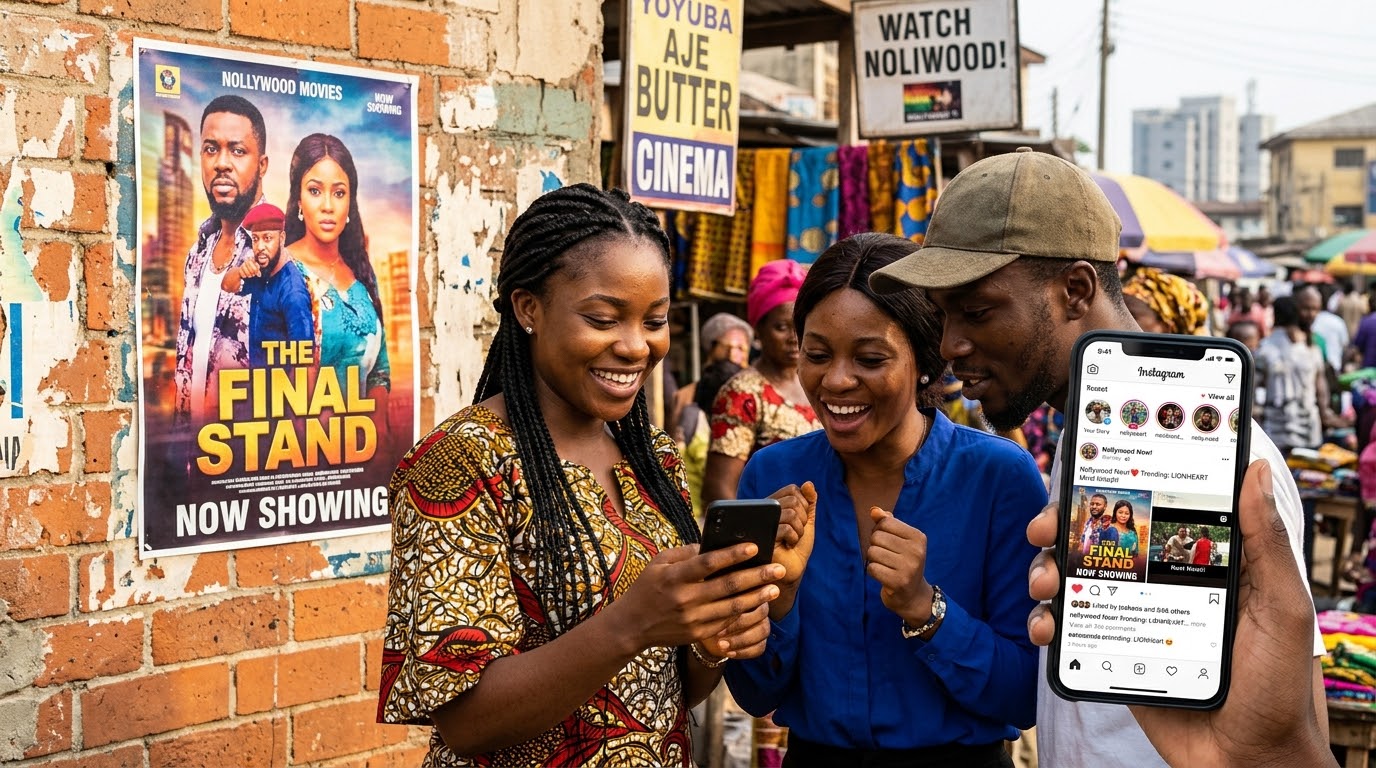
A Nollywood film no longer has to wait for a television broadcast or a cinema audience to attract attention. A short video, an actor’s post, a behind-the-scenes clip or a conversation among fans can introduce a film to thousands of potential viewers. Social media has changed how people discover movies and how filmmakers build interest before, during and after a release.
Platforms such as Facebook, Instagram, TikTok and YouTube give filmmakers and actors different ways to connect with audiences. A trailer can introduce a film’s story, while interviews and behind-the-scenes videos can help viewers feel closer to the people who made it. Short clips can also give audiences a taste of a film’s humour, drama or emotional moments without revealing the entire story.
For Nollywood, this matters because Nigerian films often depend on audiences sharing their excitement with other people. When viewers discuss a memorable scene, recreate a line from a movie or post their reactions after watching it, they can introduce the film to people who might not have seen its original promotion. These conversations can help build awareness across different age groups and communities.
Social media also allows filmmakers to communicate directly with their audiences. Instead of relying only on traditional advertising, they can answer questions, share production updates, announce premiere dates and invite viewers to participate in conversations. This direct connection can help creators understand which characters, themes and stories resonate with people, although online engagement alone does not guarantee cinema attendance or commercial success.
The opportunity extends beyond Nigeria. Nigerians living abroad can use social platforms to follow local releases, support filmmakers and share Nigerian entertainment with international audiences. A film that reflects familiar family relationships, cultural experiences or everyday struggles can prompt conversations among people who live far from home, while introducing other viewers to Nigerian perspectives.
However, online popularity does not automatically translate into a successful film. A trailer may receive many views without convincing people to buy cinema tickets. A viral scene may attract attention without giving viewers enough information about the film itself. Filmmakers therefore need to combine engaging online content with clear information about release dates, screening locations and legitimate viewing options.
There are also challenges. Unauthorised uploads, misleading clips and false release information can confuse audiences or affect a film’s commercial prospects. Filmmakers need to share accurate updates, protect their work where possible and direct viewers towards legitimate platforms. Audiences can support the industry by checking official pages before sharing announcements and choosing authorised ways to watch films.
The relationship between social media and Nollywood continues to evolve. Online communities are no longer just places where people discuss films after watching them. They can also become part of the journey through which a movie gains attention, develops an audience and becomes a shared cultural experience. When strong storytelling meets thoughtful digital promotion, Nigerian films have more opportunities to reach viewers at home and around the world.



Conversation
0 publishedJoin the discussion with a NewsRoomUpdate account. Comments are reviewed to keep the conversation constructive. Sign in to comment