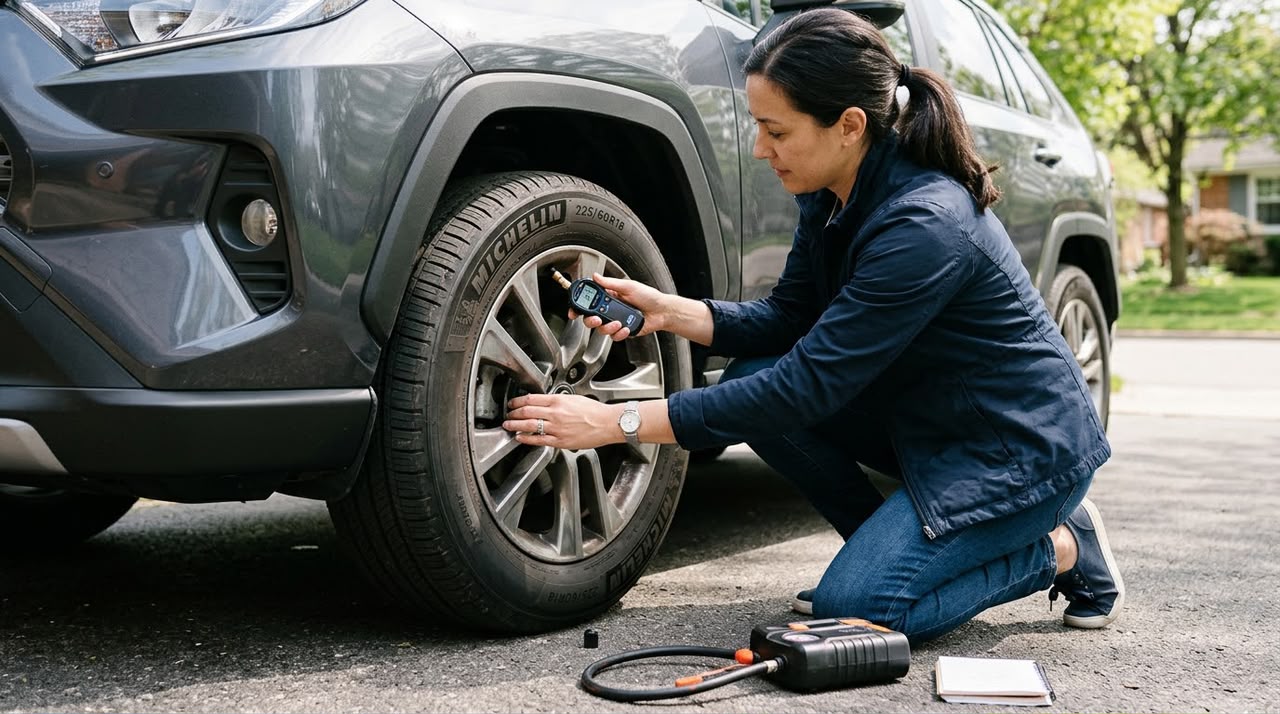
A tyre that is short of air drags on the road. The engine then works harder to move the car, and hard work drinks fuel.
Most drivers never check. They notice the tyre on the day it looks flat, which is usually the day it has already cost them money.
Check When The Tyres Are Cold
Measure in the morning, before you drive anywhere.
A tyre that has been running holds warm air, and warm air gives a high reading that is not true. You top up to a number that is too high, then the car bounces and the middle of the tyre wears out early.
Cold means cold. If you have already driven twenty minutes, wait, or check before the first trip of the day.
Find The Right Number For Your Car
The correct pressure is printed on a sticker inside the driver's door frame, or in the car manual.
Do not guess. Do not copy your neighbour. A keke and a Corolla do not share a number, and a bus carrying passengers needs a different figure from an empty one.
Some cars list two numbers: one for a light load and one for a full load. Use the one that matches your day.
Check All Four, Plus The Spare
Most people check the tyre that looks low and stop there.
Check all four, and check the spare once a month. The day you need the spare is not the day to discover it went flat two years ago.
Look At The Side Wall
While the gauge is in your hand, look for cracks, nails, bulges and worn edges.
A bulge is a tyre waiting to fail. No amount of air will fix it. Replace it before it chooses the day for you.
A nail in the tread is not always a disaster, but it must be removed and the hole repaired properly, not plugged at the roadside and forgotten.
Do Not Overfill To Save Money
Some drivers think a hard tyre rolls better. It does not. Too much air reduces grip, makes the car bounce, and wears the middle of the tread.
Soft tyres cost fuel. Hard tyres cost grip. The sticker number is the answer to both.
The Small Things
Keep the valve caps on. They cost almost nothing and they keep dirt and moisture out of the valve.
Check the pressure after a long trip with a heavy load, and again when the load comes out.
If one tyre keeps losing air, stop topping it up and find the leak. A slow puncture costs fuel every day until it is fixed.
Where To Get The Tools
A small foot pump and a pressure gauge cost less than one full tank, and they live in the boot for years. It helps to know what a pump, a gauge or a set of tyres should cost before you leave the house, so nobody quotes you a number invented on the spot.
Five minutes, once a week. That is the whole habit. The fuel bill notices, even when the road does not.



Conversation
0 publishedJoin the discussion with a NewsRoomUpdate account. Comments are reviewed to keep the conversation constructive. Sign in to comment