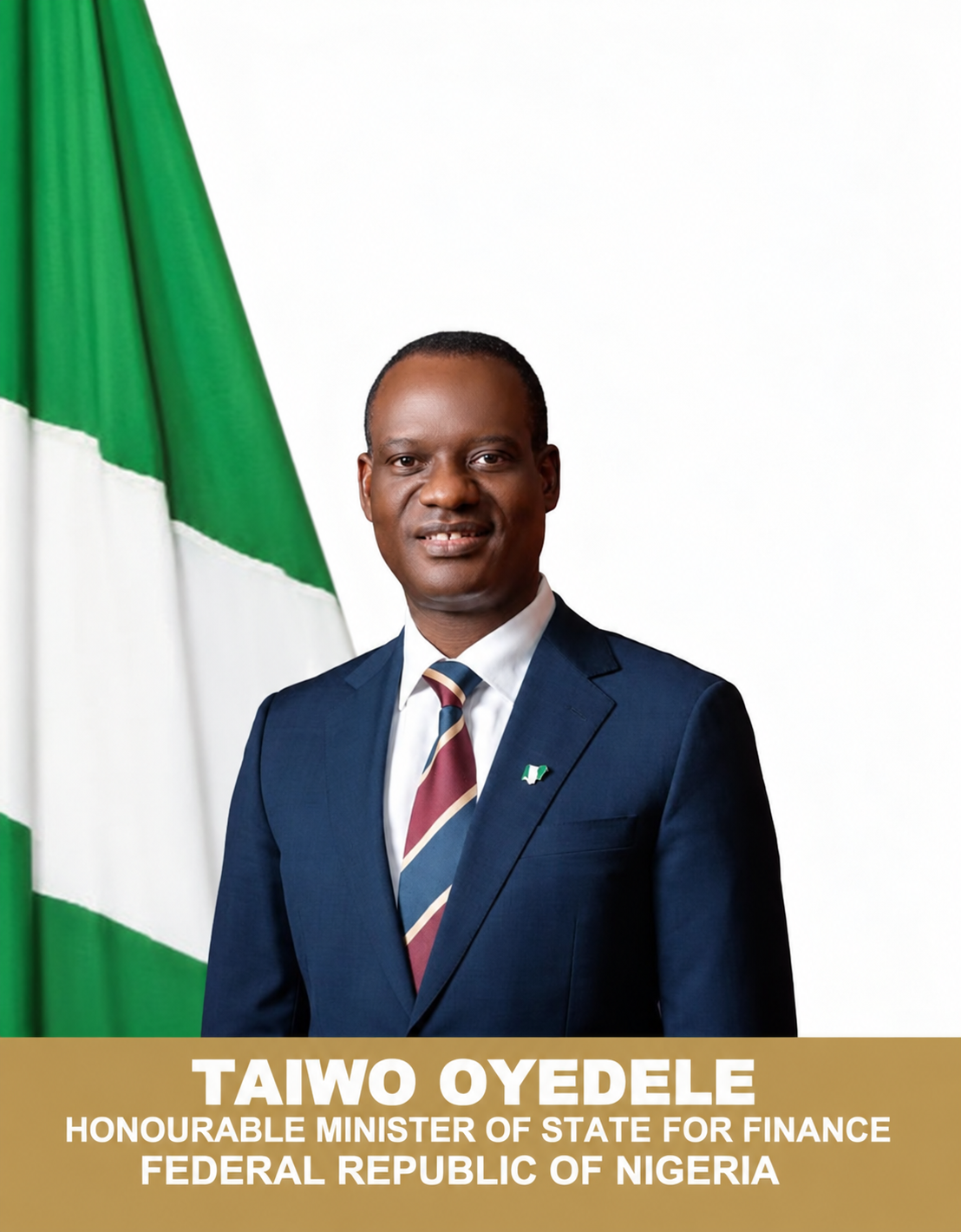
Taiwo Oyedele is a Nigerian accountant, economist, and public policy expert who serves as Nigeria’s Minister of Finance and Coordinating Minister of the Economy.
His career spans professional services, tax policy, education, and public administration.
Before becoming a minister, he was widely recognised for leading the Presidential Committee on Fiscal Policy and Tax Reforms.
President Bola Tinubu appointed him finance minister in April 2026, succeeding Wale Edun.
BACKGROUND AND EDUCATION.
Oyedele is from Ikaram, Akoko, in Ondo State, southwestern Nigeria.
His educational background combines accounting qualifications with executive training in economics, leadership and public policy.
According to the Presidency, he obtained a Higher National Diploma in Accountancy and Finance from Yaba College of Technology.
He subsequently earned a Bachelor of Science degree in Applied Accounting from Oxford Brookes University.
He also completed executive education programmes at the London School of Economics, Yale University, the Gordon Institute of Business Science and Harvard Kennedy School. These executive programmes are distinct from full undergraduate or postgraduate degrees.
PROFESSIONAL CAREER AT PWC.
Oyedele joined PricewaterhouseCoopers, commonly known as PwC, in 2001 and spent 22 years at the professional services firm. He rose to become its Fiscal Policy Partner and Africa Tax Leader.
His official biography describes experience covering tax advisory, policy advocacy, business strategy consulting, leadership development, and policy design and implementation. He spent more than a decade in senior leadership positions.
This work gave him experience examining how taxation and government policy affect businesses, investment decisions, and economic activity.
His subsequent public service career brought that professional background into national policymaking.
LEADERSHIP OF THE PRESIDENTIAL TAX REFORMS COMMITTEE.
In 2023, President Tinubu appointed Oyedele to lead the Presidential Committee on Fiscal Policy and Tax Reforms.
The committee’s mandate covered fiscal governance, revenue transformation, and measures to facilitate economic growth.
Its work addressed the structure of Nigeria’s tax system and the challenges associated with collecting public revenue.
A major objective was simplifying taxation and reducing overlapping demands on businesses. Reuters reported in March 2026 that Oyedele had previously outlined plans to reduce more than 60 federal and state taxes to fewer than 10.
These were reform objectives, rather than evidence that every proposed change had already been implemented.
The broader aim was to make business activity easier while improving government revenue collection.
APPOINTMENT AS MINISTER OF STATE FOR FINANCE.
Oyedele was sworn in as Minister of State for Finance on March 16, 2026, at the Presidential Villa in Abuja.
During the ceremony, President Tinubu praised his contribution to the tax reform programme.
The Presidency said his knowledge had helped shape measures intended to simplify taxation, expand the revenue base and improve the business environment.
The appointment marked a transition from leading a specialist reform committee to holding ministerial responsibility within the Federal Government.
APPOINTMENT AS FINANCE MINISTER.
On April 21, 2026, President Tinubu elevated Oyedele to Minister of Finance and Coordinating Minister of the Economy in a cabinet reshuffle.
He replaced Wale Edun after serving briefly as Minister of State for Finance.
The promotion placed him in a central position within the administration’s economic leadership.
His appointment connected his earlier work on taxation and revenue reform with the government’s wider ec
POSITION ON PETROL SUBSIDIES AND PRIVATE INVESTMENT.
Speaking at Chatham House on October 21, 2026, Oyedele reaffirmed the government’s opposition to restoring petrol subsidies.
“The petrol subsidy is gone, and it is staying gone,” he said, according to Reuters.
He also said domestic and foreign private investment would finance Nigeria’s next phase of growth, rather than increased state borrowing.
His remarks linked the government’s subsidy position with its broader approach to investment and economic expansion.
TEACHING, MENTORSHIP AND SOCIAL IMPACT.
Beyond government and professional services, Oyedele’s biography identifies him as an author, speaker and mentor on finance, business and economic matters.
It also records academic involvement with Babcock University and Lagos Business School, alongside participation in professional and policy organisations.
He is the founder and president of Impact Africa Foundation. His stated interests include leadership, fiscal policy, macroeconomics, mentorship and social impact.
HIS PLACE IN NIGERIA’S ECONOMIC POLICY DEBATE.
Oyedele’s career reflects a progression from private sector tax advisory to national reform leadership and ministerial office.
His background makes his profile relevant to reporting on taxation, government revenue, investment and petrol subsidy policy.
As finance minister, his work will be assessed against the practical results of the policies he helps oversee, including their effect on businesses, public finances and household living standards.

Conversation
0 publishedJoin the discussion with a NewsRoomUpdate account. Comments are reviewed to keep the conversation constructive. Sign in to comment