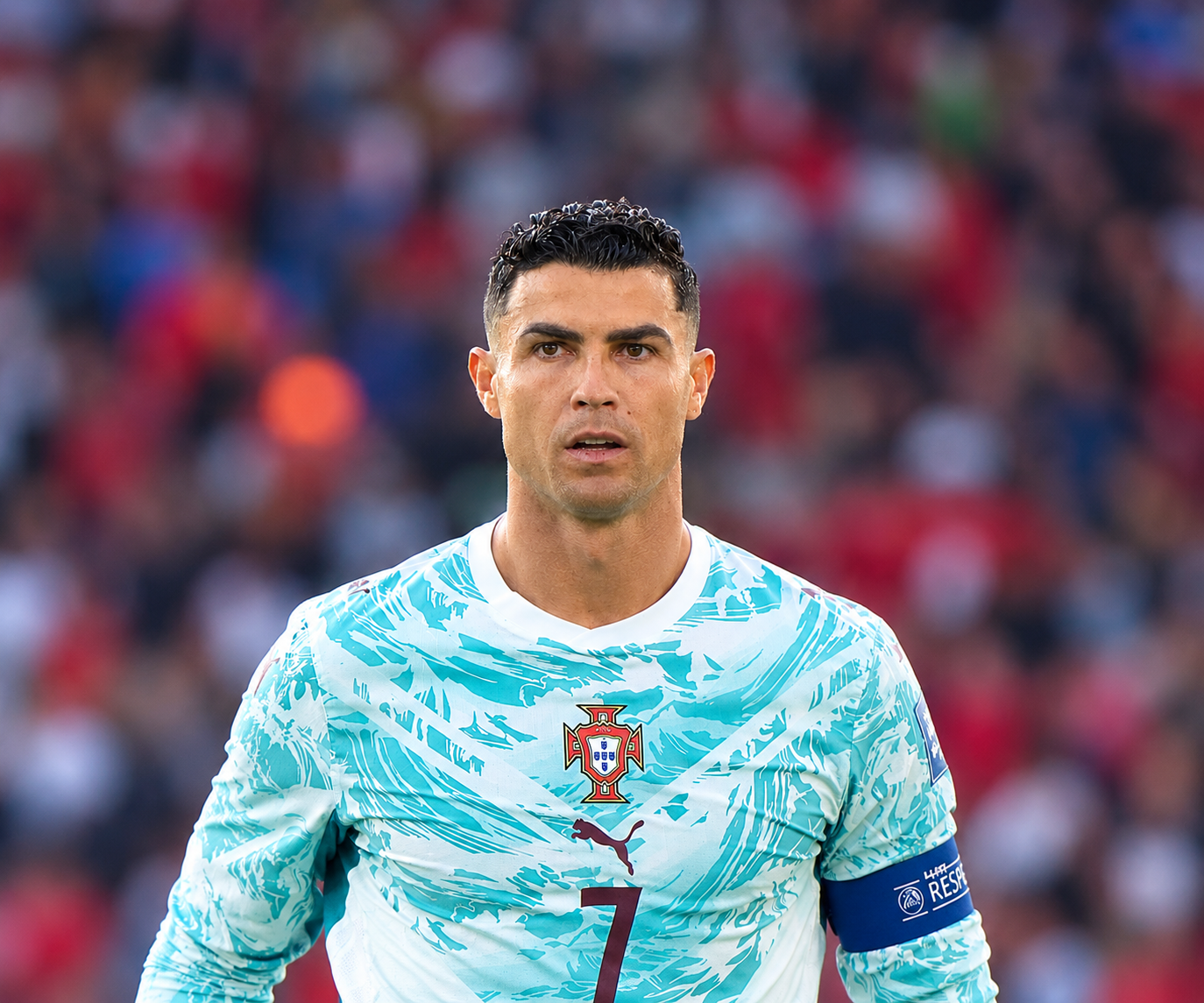
For Cristiano Ronaldo, scoring goals has been a defining feature of a career built across some of football's biggest stages. Yet one of his latest strikes for Al Nassr has attracted attention for a different reason: the uncertainty surrounding who should receive the credit.
The incident occurred on October 23, 2026, when Al Nassr faced Al Faisaly in the Saudi Pro League.Ronaldo appeared to extend his team's advantage early in the second half after Portuguese teammate João Félix delivered a free-kick into the penalty area.
Ronaldo rose to meet the ball, which entered the net after contact involving Al Faisaly defender Andrei Girotto. The forward celebrated, and the goal was recorded in the Saudi league's official tally under his name.
However, the sequence prompted questions among supporters and football statisticians. Some argued that the defender's final contact should determine the classification, while others focused on Ronaldo's attempt to reach the ball.
The disagreement turned an ordinary scoring moment into a wider discussion about how football goals are officially recorded.
Why Ronaldo's goal is being questioned.
In football, determining who scored can sometimes be more complicated than identifying the player who celebrated.
When a shot or header changes direction after touching a defender, the officials and statistical providers may need to assess the nature of the original attempt. A deflection does not automatically make a goal an own goal. The circumstances of the attacking effort and the defender's contact are important.
That distinction lies at the centre of the debate surrounding Ronaldo's strike against Al Faisaly.
The Saudi Pro League credited the goal to Ronaldo. However, Opta, a major football statistics provider, classified the incident as an own goal by Girotto. Other widely used football statistics platforms also listed the defender as the scorer of the own goal.
The different classifications have created two separate versions of Ronaldo's career total. Rather than indicating that the match result is in dispute, the disagreement concerns the individual credit attached to the goal.
The Saudi Pro League's position.
The league's decision has kept the goal in Ronaldo's official Saudi Pro League tally.
Reports published after the match said the league relied on the referee's report when determining the scorer. Under that record, Ronaldo's career total reached 982 goals, placing him 18 away from the widely discussed 1,000-goal milestone.
The position differs from the tally used by Opta, which excludes the disputed strike and places Ronaldo on 981 goals.
For supporters following the milestone, the difference may appear small. Yet when a player is approaching a round-number record, even one disputed goal can become a major talking point.
It also demonstrates why readers should check which statistical source is being used before comparing career totals.
Why the numbers matter to Ronaldo's pursuit of history.
Ronaldo's pursuit of 1,000 career goals has attracted attention because of the longevity of his scoring record and his continued presence in professional football at 41.
Every goal brings renewed interest in how close he is to the landmark. As a result, the classification of a single strike can influence headlines, statistics and discussions among supporters.
Using the Saudi Pro League's tally, Ronaldo needs 18 more goals to reach 1,000. Under Opta's count, he needs 19.
Neither figure should be presented without explaining the difference between the records. The most accurate account is to identify the league's position and acknowledge that independent statistical providers have taken a different view of the incident.
The debate is therefore not simply about a number. It is also about the standards used to maintain football records and the importance of consistent scoring criteria.
Al Nassr's victory remains intact.
Despite the disagreement over Ronaldo's goal, Al Nassr secured a 3-1 victory over Al Faisaly.
Abdullah Al-Hamdan opened the scoring for Al Nassr before the disputed strike increased the visitors' advantage. Al Faisaly later reduced the deficit through Théo Bongonda, but Ângelo Gabriel scored again for Al Nassr to help secure the win.
The result added to Al Nassr's league campaign, while the argument over Ronaldo's personal tally continued beyond the final whistle.
For the club, the three points were the immediate sporting outcome. For Ronaldo and those tracking his career, the discussion centred on whether the disputed strike should count towards his individual record.
What happens next?.
The disagreement highlights a familiar challenge in football statistics: different organisations may apply their records differently when a goal involves a deflection or possible own goal.
For now, the Saudi Pro League's record credits Ronaldowith the strike, while Opta and other statistical platforms have attributed it to Girotto. The difference should remain clear in reporting until the relevant organisations align their records or provide further clarification.
Ronaldo's pursuit of 1,000 career goals continues, and the disputed effort has added another point of discussion to that journey.
Whether the final count is tracked through the league's records or an independent statistics provider, the incident serves as a reminder that football history is sometimes shaped not only by the goals players score, but also by how those goals are officially recorded.
For Al Nassr's captain, the next goal will bring him another step forward. For supporters, the question of who deserves credit for this particular strike remains part of the story.



Conversation
0 publishedJoin the discussion with a NewsRoomUpdate account. Comments are reviewed to keep the conversation constructive. Sign in to comment