Background and location.
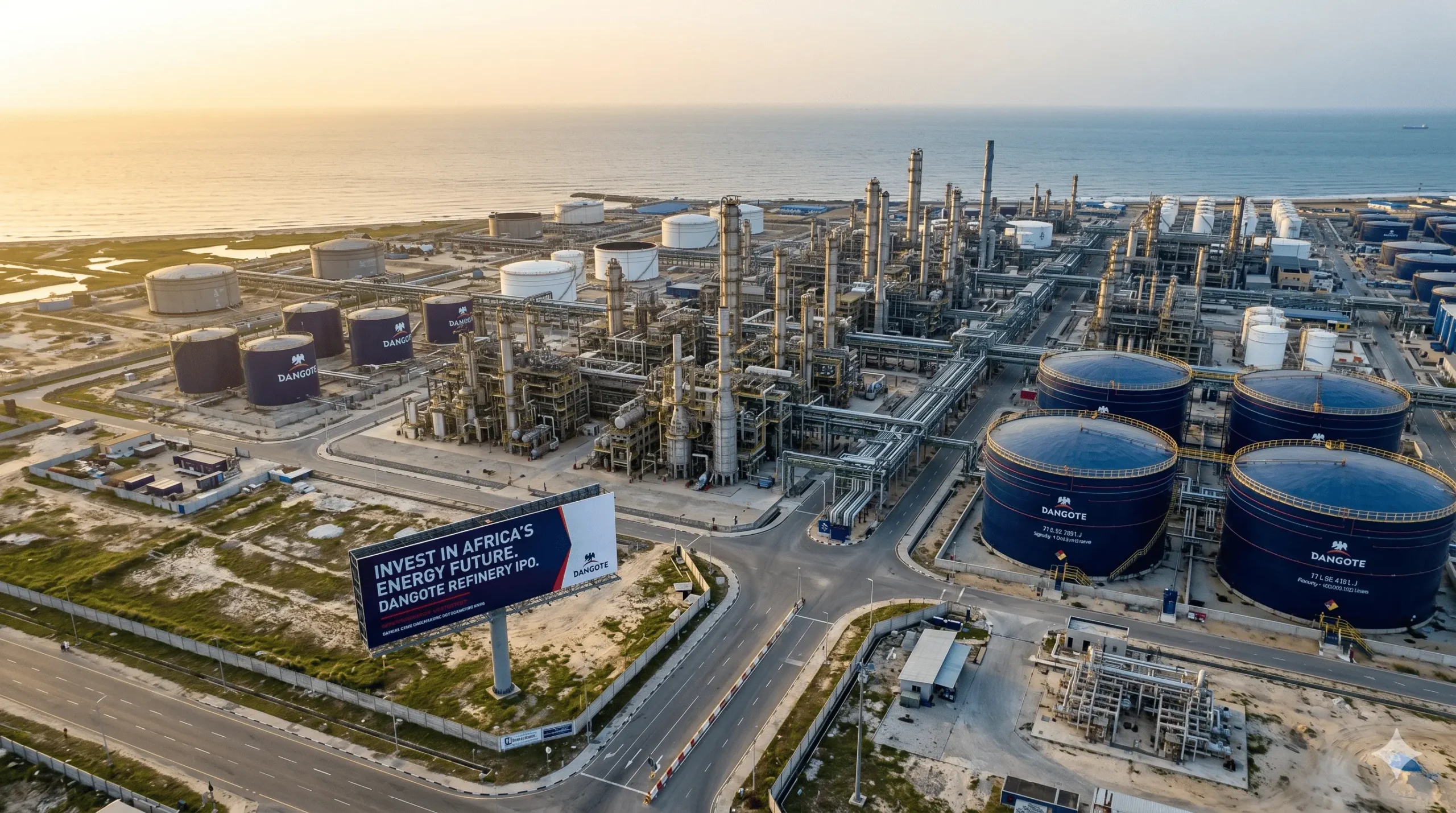
Dangote Petroleum Refinery is a privately developed refining and petrochemical complex located in the Lekki Free Zone in Lagos State, Nigeria.
Established by Nigerian industrialist Aliko Dangote, the facility represents one of Africa’s most significant industrial investments.
The refinery was built to address a longstanding problem: Nigeria produces crude oil but has historically depended heavily on imported petrol and other refined petroleum products.
Years of weak performance by state-owned refineries left the country exporting raw crude while purchasing much of its finished fuel from overseas.
Construction and commencement of production.
The refinery was officially inaugurated on May 22, 2023.
However, inauguration did not mean that all processing units immediately began commercial production.
After construction delays and preparations for start-up, the facility began producing diesel and aviation fuel in January 2024.
Reuters reported that the project cost approximately $20 billion.
Petrol production followed in September 2024, according to the International Monetary Fund’s 2025 assessment of Nigeria’s economy.
The phased start-up reflected the work required to bring the refinery’s different processing systems into operation.
Refining capacity and major products.
The refinery was originally designed to process 650,000 barrels of crude oil daily. It is widely described as Africa’s largest refinery and the world’s largest single-train refinery.
In June 2026, the company said it achieved crude processing of 700,000 barrels per day during a performance test conducted by process licensors, exceeding its original nameplate capacity.
A performance test demonstrates processing capability during that exercise; it does not establish that identical output is maintained every day.
Its fuel products include petrol, diesel and aviation fuel.
These serve different parts of the economy: petrol supports road transport and small generators, diesel powers trucks and industrial equipment, while aviation fuel supplies aircraft.
The wider complex also incorporates petrochemical production, including polypropylene, a material used in products such as packaging and plastic household goods.
The company describes its facilities as an integrated system linking refining, petrochemicals, storage and delivery infrastructure.
Why the refinery matters to Nigeria.
The refinery’s importance extends beyond the volume of fuel it produces.
Local refining allows Nigeria to carry out more of the processing that turns crude oil into higher-value products.
Instead of relying entirely on overseas refineries for this stage, the country can retain more industrial activity within its economy.
This creates opportunities for technical services, maintenance, transport and other supporting businesses.
The IMF identified the start of diesel, aviation fuel and petrol production as an important development in Nigeria’s refining capacity.
Industry reporting has also highlighted the potential for the facility to change West Africa’s dependence on imported petroleum products.
However, greater refining capacity should be distinguished from complete fuel independence.
The practical outcome depends on how consistently refineries operate, the products they produce and the quantities supplied to domestic customers.
Crude oil supply remains a challenge.
A refinery needs reliable access to crude oil at commercially workable prices.
For Dangote Refinery, securing that supply has remained an important issue despite Nigeria’s position as an oil-producing country.
In August 2026, Reuters reported that Nigeria was considering changes to crude allocation and pricing arrangements to improve access for domestic refiners.
The report cited the local refiners’ association and noted concerns about the additional costs associated with existing purchasing arrangements.
Currency arrangements have also affected the business.
Nigeria introduced a naira-for-crude programme in October 2024 to support purchases of crude in local currency.
In July 2026, Reuters reported that Dangote had begun pricing domestic fuel sales in dollars, citing inadequate supplies through the programme and the mismatch between dollar-denominated crude purchases and naira fuel sales.
These developments show that building processing capacity and securing affordable feedstock are separate challenges.
Does local refining guarantee cheaper petrol?
Local refining can improve supply options, but it does not automatically guarantee low pump prices.
Crude oil has an international market value.
Refiners also face processing, financing, maintenance, and transport expenses.
Exchange-rate movements can affect imported equipment, crude purchases, and other costs.
Consumers’ final prices additionally reflect the movement of fuel from the refinery to depots and filling stations, alongside commercial margins.
Reuters reported in September 2026 that Nigerian fuel prices had risen despite the refinery operating at high capacity, illustrating the continuing influence of international energy costs on domestic prices.
The distinction matters: improved availability and lower prices are related goals, but one does not necessarily deliver the other.
Exports and expansion plans.
Dangote Refinery also supplies markets outside Nigeria.
In June 2026, Chief Executive David Bird told Reuters that the facility had a substantial surplus of aviation fuel available for international customers.
Export sales provide another market for production beyond local demand.
The company has announced a further expansion programme.
Reuters reported in September 2026 that its initial public offering prospectus outlined plans to invest $14.3 billion to increase processing capacity to 1.4 million barrels per day, with completion targeted for 2029.
That figure represents a planned future capacity, rather than capacity already operating. Delivery will depend on financing, construction and successful commissioning.
The outlook.
Dangote Refinery has strengthened Nigeria’s ability to process crude oil domestically and participate more actively in international refined product markets.
Its development marks a significant change in a country long associated with the contrast between crude exports and fuel imports.
Its lasting value will depend on dependable operations, workable crude supply arrangements, and efficient delivery to customers.
For Nigerians, the most meaningful measure of success will be how that industrial capacity translates into reliable fuel supplies and a more competitive market.



Conversation
0 publishedJoin the discussion with a NewsRoomUpdate account. Comments are reviewed to keep the conversation constructive. Sign in to comment