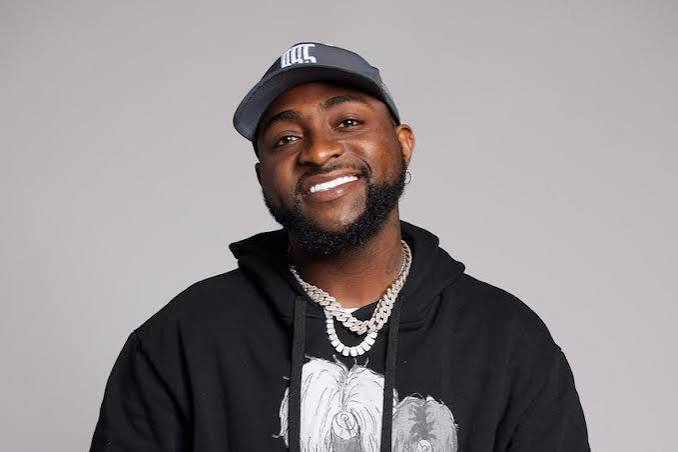
In this Davido biography, I trace the life of David Adedeji Adeleke, the Nigerian singer, songwriter, and performer born on 21 November 1992 in Atlanta, Georgia.
Raised largely in Lagos, he developed a career that connected Nigerian popular music with audiences beyond the country.
What interests me about his story is the relationship between opportunity and achievement. His privileged background is part of the record, but understanding his career also requires attention to the songs, collaborations, and business decisions that sustained public interest.
By 20 August 2026, Davido was 33. This account considers his life and established career up to that date.
Davido Biography And Early Life.
Davido was born to businessman Adedeji Adeleke and Veronica Adeleke, a university lecturer.
His family has roots in Ede, Osun State, although his upbringing connected him with both Nigeria and the United States.
I would not separate that background from his public identity. Family wealth became a recurring subject in how audiences discussed him, including through the name of his debut album, Omo Baba Olowo.
However, I see a limitation in treating his background as the complete explanation for his popularity.
Access can create opportunities, but listeners still decide which songs they return to and which performances they want to attend.
For me, the more useful question is how he turned early visibility into a recognisable musical identity.
Education And The Decision To Pursue Music.
Davido attended the British International School in Lagos before studying business administration at Oakwood University in Alabama.
He left Oakwood as his interest in making music developed, later returning to university education in Nigeria.
He graduated from Babcock University in July 2015 with a degree in music.
What stands out to me is that education and performance eventually occupied the same chapter of his life.
His return to university was not simply a period before his career began; he was already building a public profile.
I see that experience as an important part of the Davido biography because it complicates the familiar story of an aspiring musician leaving school.
In his case, the decision to pursue entertainment was followed by the completion of a degree connected to that ambition.
The Breakthrough And A Distinctive Sound.
Davido released Back When, featuring Naeto C, in 2011. Dami Duro followed that year and became a defining early breakthrough, with his debut album, Omo Baba Olowo, arriving in 2012.
He also won the Next Rated award at The Headies in 2012.
I hear the appeal of his early work in its energy and directness. His delivery often makes celebration, affection and confidence feel like shared experiences rather than distant celebrity performances.
Songs including Skelewu and Aye helped broaden his catalogue. Later, If and Fall became central records in the next stage of his career.
In my view, a Davido biography needs to account for that continuity. His career developed through repeated connections with listeners, with different songs introducing him to different audiences.
Albums And International Recognition.
Davido released A Good Time in 2019 and A Better Time in 2020. Timeless followed in 2023, while 5ive was released on 18 April 2025.
I see these projects as useful markers of his development, although album dates alone cannot explain an artist’s influence.
Collaborators, individual songs and live performances also shape how a catalogue travels.
His first Grammy nominations came for the 2024 awards. Timeless was nominated for Best Global Music Album, Feel for Best Global Music Performance, and Unavailable, featuring Musa Keys, for Best African Music Performance.
I would describe those accurately as nominations. Their significance lies in the recognition they brought to his work and his participation in the inaugural Best African Music Performance category.
For me, this part of the Davido biography illustrates how an established Nigerian career can gain additional international recognition without losing its connection to listeners at home.
Marriage And Family Life.
Davido is married to Chioma Rowland Adeleke. Their wedding celebrations included a traditional ceremony in Lagos in June 2024 and a white wedding in Miami in August 2025.
I see his marriage as an important part of his public story, while recognising that a biography does not require every private family detail.
Public attention can make a celebrity’s relationships appear to belong to everyone.
I would resist that assumption, particularly where children are concerned.
My interest here is in the broad relationship between family life and a demanding entertainment career.
Marriage and fatherhood sit alongside recording, travel and public expectations, rather than existing outside them.
Business, Philanthropy And His Wider Influence.
Davido established Davido Music Worldwide, widely known as DMW, in 2016. Artists associated with the label have included Mayorkun, Dremo, Peruzzi, and Liya.
I regard that business role as a meaningful extension of his career.
A label creates responsibilities beyond an artist’s own recordings, including decisions about talent, promotion and collaboration.
I would assess charitable work through its documented commitments and delivery, just as I would assess a music career through its recorded work.
Taken together, the chapters in this Davido biography reveal an artist whose public identity extends across entertainment, enterprise and giving.
My assessment of his influence rests most firmly on his ability to build a recognisable catalogue while participating in the wider development of Nigerian popular music.


Conversation
0 publishedJoin the discussion with a NewsRoomUpdate account. Comments are reviewed to keep the conversation constructive. Sign in to comment