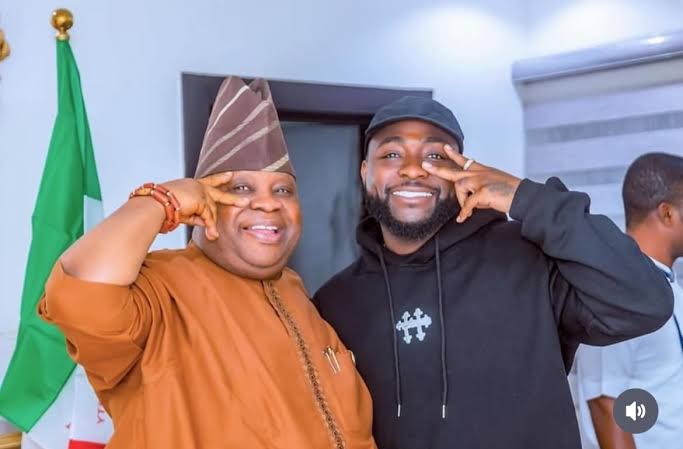
The conversation surrounding Nigeria's 2027 presidential election has taken an unexpected turn, drawing popular Afrobeat singer David Adeleke, better known as Davido, into a political controversy involving his uncle, Osun State Governor Ademola Adeleke, and President Bola Ahmed Tinubu.
What began as a political decision attributed to Governor Adeleke has reportedly developed into a heated debate on social media, with Nigerians discussing family loyalty, personal political beliefs and the growing influence of celebrities in the country's political landscape.
How Governor Adeleke's Political Decision Sparked Controversy
The controversy began following reports that Governor Ademola Adeleke had declared support for President Tinubu's ambition to secure a second term in office in the 2027 general elections.
The reported development quickly attracted public attention, particularly because Davido had previously expressed political opinions and actively supported his uncle during election campaigns.
For some Nigerians, the situation raised questions about whether the singer shared his uncle's political position. Others, however, argued that being related to a politician did not automatically mean sharing the same political interests or beliefs.
As discussions continued, Davido found himself at the centre of a debate that extended beyond his music career and into the complicated relationship between family ties and political independence.
VeryDarkMan's Reaction Adds to the Debate
The controversy reportedly gained further attention following a reaction from popular Nigerian social media activist Martins Vincent Otse, widely known as VeryDarkMan.
VeryDarkMan reportedly criticised Davido over his previous political statements, adding another dimension to the ongoing discussions about the singer's political position.
His reaction triggered further conversations online, with some social media users questioning whether Davido had remained consistent in his political views.
However, not everyone agreed with the criticism. Several supporters defended the singer, insisting that he should not be held accountable for political decisions made by his uncle.
According to those defending him, political beliefs are personal, and even members of the same family can support different candidates without necessarily being in conflict.
The disagreement reflected a broader debate about the expectations Nigerians place on celebrities who publicly express political opinions.
Davido's December Concerts Become Part of the Conversation
As the political discussion continued, attention reportedly shifted to Davido's upcoming December concerts in Lagos.
Some social media users threatened to boycott the singer's performances, expressing dissatisfaction with his uncle's reported support for Tinubu's re-election bid.
For these critics, the controversy appeared to go beyond politics, raising questions about whether a celebrity's public image should be influenced by the political activities of close family members.
Yet, other fans pushed back against the boycott calls. They argued that Davido's music career should be judged independently of his uncle's political alliances.
To them, attending a concert was about enjoying music and supporting an artiste, not necessarily endorsing the political decisions of everyone connected to that artiste.
The mixed reactions once again demonstrated how quickly political conversations can spill into Nigeria's entertainment industry, particularly when popular figures are involved.
Davido's Political Position Comes Under Scrutiny
Amid the growing debate, Davido's previously reported comments concerning the 2027 presidential election resurfaced.
The singer had reportedly explained that his uncle's political choices did not automatically reflect his own position. He also reportedly indicated that he had not officially endorsed any presidential candidate for the forthcoming election.
These reported remarks became central to the discussion, as Nigerians continued to debate whether Davido should be expected to align himself politically with Governor Adeleke.
For some observers, the situation highlights the importance of allowing individuals to make independent political decisions, even when their relatives occupy influential positions.
Others believe celebrities who have previously spoken publicly about politics should expect their statements and actions to attract scrutiny, especially during an election season.
Nevertheless, the central issue remains whether a person's political beliefs should be judged by their own words and actions or by the affiliations of their family members.
A Family Connection, a Political Debate and a Music Career
The controversy involving Davido, Governor Ademola Adeleke and President Tinubu highlights the increasingly close relationship between entertainment and politics in Nigeria.
With the 2027 general elections approaching, public figures are likely to face growing scrutiny over their political opinions, endorsements and relationships with influential politicians.
For Davido, the situation presents a difficult public conversation in which his identity as a musician is being discussed alongside his connection to a serving governor.
However, family ties do not necessarily translate into identical political beliefs. Relatives can disagree on candidates, parties and government policies while maintaining their personal and professional relationships.
Ultimately, the reported controversy raises an important question: should Davido be held responsible for his uncle's political choices, or should he be allowed to make his own decisions without pressure from the public?
As the debate continues, the distinction between family loyalty and personal political freedom remains at the heart of the discussion.
Conversation
0 publishedJoin the discussion with a NewsRoomUpdate account. Comments are reviewed to keep the conversation constructive. Sign in to comment