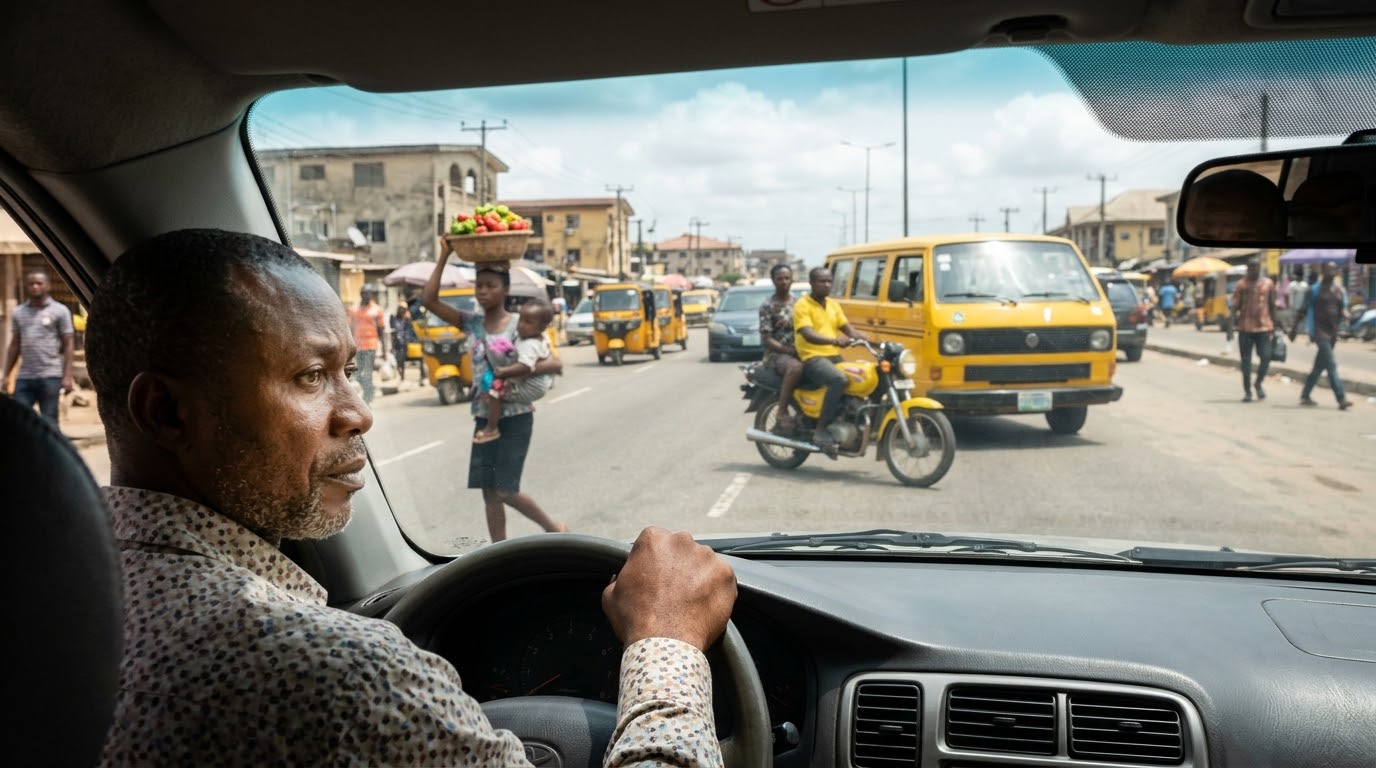
Driving safely is not just about knowing how to start a vehicle, change gears or follow traffic signs. It also involves recognising danger before it becomes an emergency.
A vehicle may suddenly stop, a motorcycle may move into your lane, a pedestrian may cross unexpectedly or another driver may make a dangerous turn. These situations can happen within seconds, leaving little time for someone who is not paying attention.
This is why defensive driving is important.
Defensive driving means operating a vehicle in a way that helps you identify possible dangers, anticipate what other road users might do and take action to avoid a crash.
It does not mean driving slowly everywhere or being afraid of other vehicles. It means making careful decisions, staying prepared and understanding that other road users may not always behave as expected.
For Nigerian drivers who regularly deal with busy roads, traffic congestion, unexpected obstacles and changing road conditions, these skills can make a significant difference.
1. Look Beyond the Vehicle Directly in Front of You
One common driving mistake is concentrating only on the vehicle immediately ahead.
Although watching the vehicle in front is important, defensive drivers pay attention to a wider area of the road.
Look further ahead to identify slowing traffic, road construction, broken-down vehicles, pedestrians, approaching junctions and other possible dangers.
For example, if several vehicles ahead begin slowing down, you may need to reduce your speed before the vehicle directly in front of you applies its brakes.
This gives you more time to respond and reduces the risk of sudden braking.
You should also check your mirrors regularly to understand what is happening behind and beside your vehicle.
The earlier you notice a possible problem, the more time you have to make a safe decision.
2. Do Not Assume Other Drivers Will Follow the Rules
Every driver is expected to obey traffic regulations, but not everyone behaves responsibly on the road.
A vehicle may change lanes without indicating. A motorcycle may overtake from an unexpected direction. Another driver may approach a junction without slowing down.
Defensive driving means preparing for these possibilities instead of assuming everyone will make the correct decision.
For instance, when approaching a junction, reduce your speed and watch vehicles coming from different directions. Even when you have the right of way, remain prepared to stop if another road user enters your path.
Being careful does not mean accepting another driver’s mistake. It means avoiding a situation where that mistake causes a crash.
3. Control Your Speed Before You Reach Danger
Speed affects how quickly a driver can respond to danger and how much distance a vehicle needs to stop.
When a vehicle moves faster, the driver has less time to react to unexpected situations. The vehicle also needs more distance to come to a complete stop.
This is particularly important around schools, markets, residential areas, busy junctions and places where pedestrians frequently cross.
Drivers should obey posted speed limits and reduce speed when road conditions require it.
A road that appears clear during the day may become more dangerous at night because visibility is reduced. Rain, potholes, sharp bends and heavy traffic also require additional caution.
Driving at a speed that matches the conditions is more important than trying to arrive a few minutes earlier.
4. Maintain Enough Space Between Your Vehicle and Others
Following another vehicle too closely is dangerous because it reduces the time available to respond when that vehicle suddenly slows down or stops.
A useful defensive driving technique is the two-second rule.
Choose a fixed object ahead, such as a road sign or tree. When the vehicle in front passes that object, begin counting. If you reach the same object before two seconds have passed, you are following too closely.
Increase the distance when driving in rain, at night, on slippery roads or when visibility is poor.
You should also leave enough space when driving beside motorcycles, bicycles and large vehicles.
Remember that maintaining a safe distance gives you more room to react when something unexpected happens.
5. Watch Out for Blind Spots
Blind spots are areas around a vehicle that cannot be seen clearly through its mirrors.
A motorcycle, car or pedestrian may be positioned in one of these areas without the driver noticing.
Before changing lanes, turning or reversing, check your mirrors and look over your shoulder where appropriate.
Do not depend on your mirrors alone.
This is especially important when driving large vehicles such as buses, trucks and delivery vans because their blind spots can be larger.
Other road users should also avoid staying too close to the sides or rear of large vehicles where the driver may not be able to see them.
6. Avoid Distractions While Driving
A driver needs full attention to recognise hazards and respond correctly.
Using a phone, reading messages, eating, adjusting entertainment systems or turning to speak to passengers can distract you from the road.
Even a short distraction can cause you to miss a warning sign, a sudden stop or someone crossing in front of your vehicle.
Before starting your journey, arrange your navigation, adjust your mirrors and seat, and make sure everything you need is within easy reach.
If you need to make a call, read a message or handle something that requires attention, stop in a safe and permitted location first.
Your safety and the safety of other road users should never depend on how quickly you can respond to a phone notification.
7. Never Drive When You Are Too Tired
Fatigue affects concentration, reaction time and decision-making.
A tired driver may struggle to maintain focus, overlook road signs or fail to respond quickly when traffic changes.
This can be particularly dangerous for commercial drivers, delivery riders and people who spend long hours travelling between locations.
Before a long journey, get enough rest and plan suitable breaks.
If you begin feeling sleepy while driving, do not try to force yourself to continue. Find a safe place to stop and rest.
Opening the windows or increasing the volume of music does not replace proper rest.
8. Prepare for Rain, Potholes and Unexpected Road Conditions
Nigerian drivers may encounter damaged roads, standing water, loose objects, road construction and sudden changes in weather.
Defensive driving requires adjusting your decisions to the conditions around you.
During rainfall, reduce speed, increase your following distance and avoid sudden braking. Check that your headlights, brake lights and windscreen wipers are working properly.
When approaching potholes, slow down carefully and check surrounding traffic before changing direction. Do not suddenly swerve into another lane without checking whether it is safe.
If a road is flooded and you cannot determine its depth or whether it is safe to cross, avoid taking unnecessary risks.
A few minutes of caution can prevent expensive vehicle damage and serious injuries.
9. Keep Your Vehicle Ready for the Road
A driver may make good decisions and still face danger if the vehicle has serious mechanical problems.
Faulty brakes, worn tyres, damaged headlights, defective indicators and poor windscreen wipers can make it difficult to control a vehicle safely.
Check your tyres regularly, including the spare tyre. Make sure your brakes respond properly and that all lights and indicators work.
Pay attention to unusual sounds, warning lights and changes in how the vehicle handles.
Do not ignore a problem simply because the vehicle is still moving.
Routine maintenance helps identify faults before they become emergencies. Drivers who want to build stronger habits around Road Safety should treat vehicle condition as part of their daily responsibility.
10. Stay Calm When Other Drivers Behave Aggressively
Traffic congestion, unnecessary overtaking and arguments between drivers can create stressful situations.
However, responding aggressively can make a dangerous situation worse.
Avoid competing with another driver, chasing someone who cuts into your lane or deliberately blocking a vehicle out of anger.
If someone behaves dangerously, create enough distance to protect yourself and continue driving responsibly.
Being calm does not mean allowing others to intimidate you. It means refusing to turn another person’s poor decision into a bigger problem.
Professional drivers especially need to understand that patience and self-control are part of their responsibility.
Drivers who want to improve their knowledge, connect with other professionals and access driver-focused resources can also explore VAYA Drivers Club.
11. Learn to Make Safe Decisions Before Emergencies Happen
Defensive driving becomes more effective when safe decisions become regular habits.
Before changing lanes, check your surroundings. Before approaching a junction, reduce your speed. Before overtaking, make sure you have enough visibility and space to complete the movement safely.
When you notice a possible hazard, think about the safest available response instead of reacting in panic.
Drivers should also understand the traffic signs, road markings and regulations that apply to the roads they use.
Learning these rules and applying them consistently can improve confidence and reduce unnecessary risks.
Defensive Driving Is a Responsibility, Not Just a Skill
No driver can predict every situation that may happen on the road. However, drivers can reduce many risks by staying alert, controlling their speed, maintaining safe distances and making responsible decisions.
Defensive driving is useful for private motorists, commercial drivers, professional chauffeurs, delivery riders and anyone who operates a vehicle.
The goal is not simply to avoid damaging a vehicle. It is to protect human lives.
A good driver does not only think about reaching a destination. A responsible driver also thinks about everyone sharing the journey.
The safest journey is one where everyone gets to their destination alive.



Conversation
0 publishedJoin the discussion with a NewsRoomUpdate account. Comments are reviewed to keep the conversation constructive. Sign in to comment