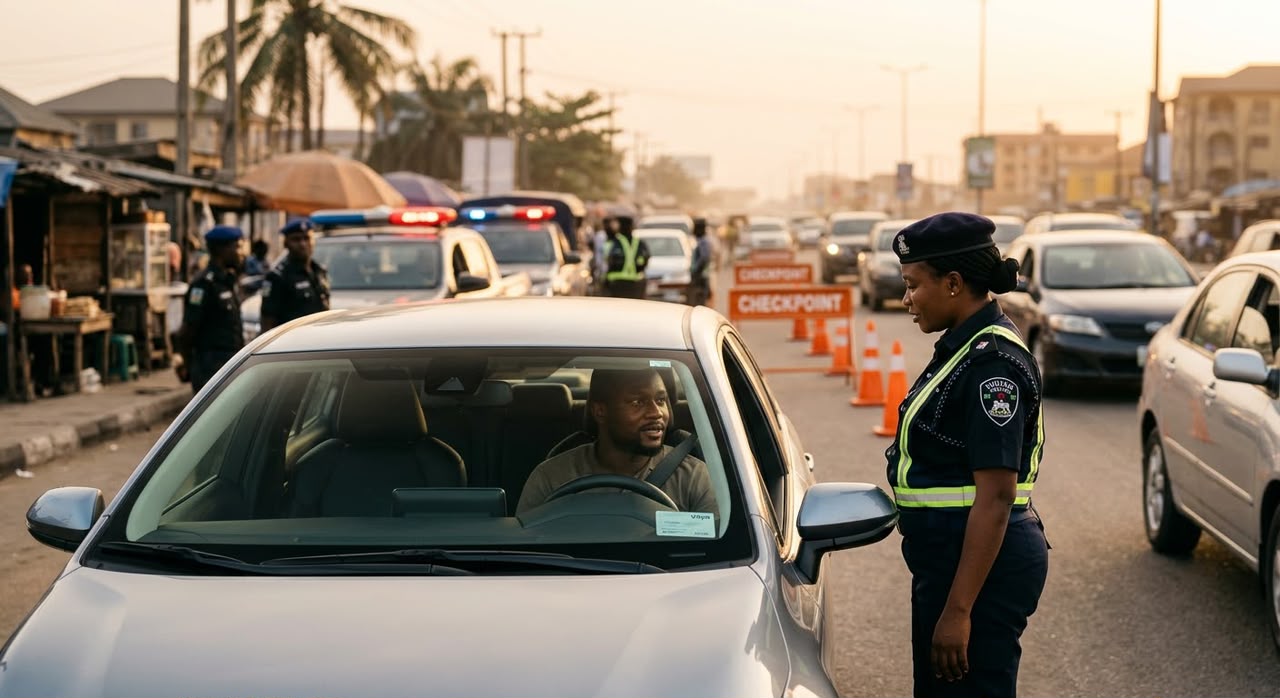
A driver heading home through Lagos traffic may be stopped at a checkpoint. Another travelling between Ibadan and Lagos may encounter officers checking vehicles along the highway. For commercial drivers, these stops are part of the realities of spending long hours on Nigerian roads.
The important question is not simply whether an officer can stop a vehicle. It is what a driver should do when it happens, which documents to keep ready, how to respond to a request that seems improper and where to seek help if a situation becomes uncomfortable.
Knowing these things can prevent unnecessary arguments I and help drivers make better decisions under pressure.
Keep Your Documents Ready
Before setting out, make sure your driver’s licence is valid and that you have the required vehicle documents for your journey. Depending on the vehicle and its use, these may include registration documents, roadworthiness documentation and valid insurance.
Keep the documents organised so you can retrieve them without searching through bags or the vehicle while an officer waits. Check their expiry dates regularly, especially if you drive for a living and cannot afford to be caught unprepared during a workday.
If an officer requests a document, respond calmly and ask for clarification if you do not understand the request. Do not assume that every roadside check is unlawful, but do not ignore a genuine concern either. The Federal Road Safety Corps has statutory enforcement powers relating to traffic offences, and the police also have lawful powers to enforce the law in appropriate circumstances.
Stay Calm and Communicate Clearly
Being stopped can be frustrating, particularly when you are trying to meet a passenger, deliver goods or get to work on time. However, shouting, making threats or attempting to drive away from an officer can turn a manageable encounter into a dangerous one.
Slow down as you approach a checkpoint and follow lawful instructions. Keep your hands visible, speak respectfully and avoid sudden movements. If you are unsure why you have been stopped, politely ask what the issue is.
If an officer identifies a suspected traffic offence, listen to the explanation. You can ask which rule you are alleged to have broken and what the official procedure is for resolving it. You do not have to agree with every allegation to remain calm while the matter is addressed.
If the situation escalates, prioritise your safety. An argument on a busy road is rarely the right place to resolve a legal dispute. Where necessary, seek advice or make a complaint through an appropriate official channel afterwards.
What If an Officer Asks for Money?
A request for money without a clear legal basis should not be treated as a normal cost of driving. At the same time, drivers should understand the difference between an improper demand and an official penalty for an established offence.
If an officer says you must pay a fine, ask politely for the offence and the official payment process. Where a formal notice, ticket or receipt is required, keep it. Avoid handing over cash simply because you feel pressured to make a problem disappear, and never offer a bribe.
Do not attempt to settle a disagreement through insults or physical confrontation. If you suspect misconduct, remember the details you can safely observe, including the location, time, officer identification and vehicle details. You can document what happened once you are in a safe place.
The Federal Road Safety Corps publishes official offence and penalty information on its website. Checking the relevant information can help you understand whether a stated traffic penalty matches an established offence.
Can You Record a Checkpoint Encounter?
A phone recording may help preserve details about an encounter, but recording should never put you or your passengers in danger. Do not reach suddenly for your phone, interfere with an officer’s duties or assume that every situation is safe to film.
If you decide to document what happens, use your judgement and prioritise safety. A passenger may be better placed to take notes, where appropriate and safe. You can also write down what you remember as soon as possible after leaving the scene.
Keep any original recording or other evidence secure. Avoid posting accusations online before checking the facts, particularly when the identity of the people involved or the circumstances remain unclear.
If you believe an officer has acted improperly, consider making a complaint through an official police or human-rights channel. Include the date, location, a clear account of what happened and any supporting evidence you lawfully obtained.
What Should Commercial Drivers Do Differently?
For commercial drivers, a checkpoint can affect more than a single journey. A delay may disrupt a passenger’s schedule, reduce the number of trips completed that day or create problems with a vehicle owner or transport operator.
Preparation is therefore part of the job. Check your documents before starting work, inspect your vehicle, understand the routes you plan to use and leave enough time for normal traffic delays and roadside checks. If you use a ride-hailing or transport platform, follow its relevant safety and incident-reporting procedures as well.
Drivers should also keep emergency contacts accessible and let a trusted person know their route when undertaking a long journey. These simple habits will not prevent every problem, but they can make it easier to respond when something unexpected happens.
Organisations that educate and support drivers can also contribute to safer journeys by helping members understand road safety, responsible conduct and appropriate reporting procedures. The value lies in giving drivers useful knowledge they can apply on the road, not merely telling them which service to join.
Know Where to Seek Help
When an encounter raises a serious concern, use an appropriate official channel rather than relying entirely on social media discussions or information passed between drivers.
The Nigeria Police Force has a Complaint Response Unit for complaints involving police conduct. The National Human Rights Commission also receives complaints relating to human-rights violations. For traffic-related questions, the Federal Road Safety Corps provides official information about its responsibilities and traffic offences.
Keep a record of any complaint you submit and retain the reference number if one is issued. If you face an immediate threat, focus first on reaching safety and contacting appropriate emergency assistance.
Drivers can consult the official websites of the Nigeria Police Force, the Federal Road Safety Corps and the National Human Rights Commission for further information.
Be Prepared Before You Set Out
A checkpoint does not have to become a confrontation. Valid documents, a calm response and an understanding of official procedures can help drivers manage roadside stops more confidently.
For Nigerian motorists, especially those who spend most of their working day on the road, road awareness goes beyond knowing how to steer a vehicle. It also means understanding responsibilities, recognising potential problems and knowing how to seek help when necessary.
Platforms like VAYA Drivers Club support professional drivers with practical education, safety resources and guidance. They bring useful information together to help drivers understand their rights, improve their knowledge and make better-informed decisions on and off the road.
Drivers who want to learn more about safe driving, transport responsibilities and available services can explore relevant driver education and support resources, including those offered through VAYA Drive Club.
Before your next journey, take a few minutes to check your licence, vehicle papers and insurance documents. Being prepared is a simple step towards a safer and less stressful experience on Nigerian roads.


Conversation
0 publishedJoin the discussion with a NewsRoomUpdate account. Comments are reviewed to keep the conversation constructive. Sign in to comment